Wickfield
David CopperfieldWickfield is a lawyer and steward of a wealthy gentleman’s estates, but his significance in David Copperfield’s story is chiefly personal: he offers David shelter and counsel at a vulnerable turning point, and his attachment to his daughter, Agnes Wickfield, gives his household its emotional center. Through David’s retrospective narration, Wickfield is presented as a courteous professional whose orderly home makes room for care, while his advice carries a note of weariness that hints at concerns the young visitor does not yet understand.
Identity and First Impression
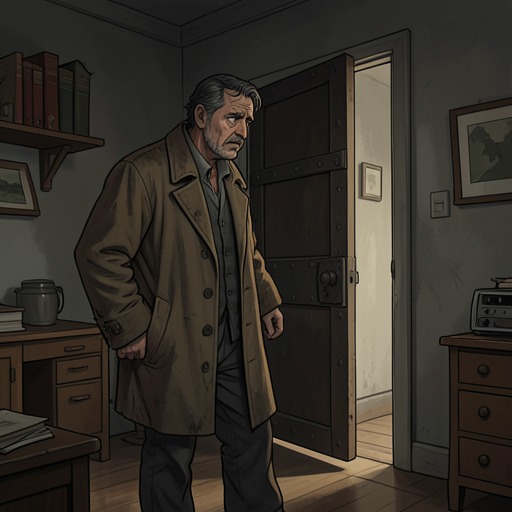
When Betsey Trotwood brings David to Wickfield, he is occupied with work but receives her in an office furnished with books, papers, tin boxes, and an iron safe set into the wall. The setting establishes both the practical character of his life and the material world of his profession: documents and responsibilities are close at hand, even in the domestic house where David will find a temporary place. Wickfield identifies himself through his work as a lawyer and steward of a rich gentleman’s county estates.
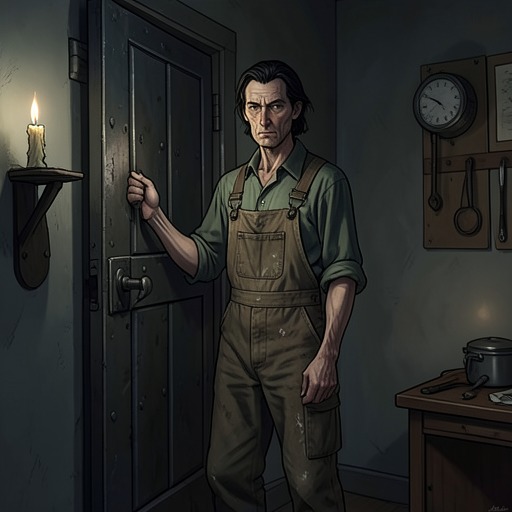
David observes a man whose hair has turned white while his eyebrows remain black, with an agreeable face and a carefully kept appearance. He notices the richness of Wickfield’s complexion and recalls that Peggotty had taught him to associate port wine with such coloring; he also imagines that same association in Wickfield’s voice and connects it to his increasing corpulence. These details are the child’s impressions, filtered through a narrator who remembers how he interpreted the signs around him. They should not be mistaken for a direct explanation of Wickfield’s habits; their value here is the way they register David’s attentive, imaginative scrutiny of an adult whose character he is only beginning to know.
The House and Agnes Wickfield
Wickfield’s professional office is only one part of the environment he makes available to David. He offers to leave the boy in his house, describing it as quiet, roomy, and well suited to study. He frames the arrangement as temporary and reversible: if it proves inconvenient, David can move on while Betsey finds another place for him. The offer is practical rather than grand, but it gives the child somewhere to stay while his education is arranged.
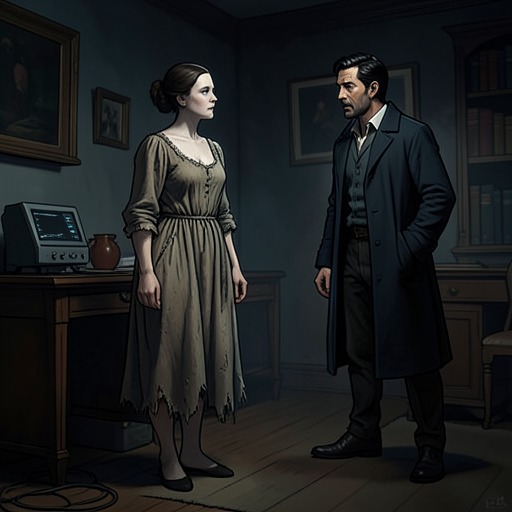
The house’s intimate life comes into focus when Wickfield taps at a door and Agnes Wickfield comes out to greet him. She kisses her father; he holds her hand as he introduces David, and she listens while Wickfield explains who the boy is. Agnes is his daughter and the household’s little housekeeper, carrying a small basket of keys and showing David and Betsey to his room. Wickfield’s manner toward her leads David to recognize that his daughter is the central motive of his life. The narrator’s lasting image of Agnes is inseparable from this entrance: her calm brightness on the old staircase becomes an association that stays with him.
The house is described as orderly and retired, with oak beams and seats, quaint windows, flowers, and a series of carefully furnished corners. These particulars give Wickfield’s offer a character beyond mere accommodation. David is not placed in an impersonal lodging: he enters a home whose welcome is made tangible through Agnes’s greeting, her attention to his needs, and her father’s evident closeness to her. Wickfield’s family bond is thus also the means by which David is received into a stable domestic setting.
Counsel and Care for David
Betsey has adopted David and brought him to Wickfield to find a school where he can be thoroughly taught and well treated. Wickfield responds by asking about her motive, while Betsey answers plainly that she wants the child to be happy and useful. His questions mark him as deliberate: he does not treat an educational decision as a matter of choosing a school without considering why the child needs a new situation. Once the immediate difficulty is clear, he offers his home as a place where David can remain for the present.
His care extends from lodging to advice about David’s next school. Wickfield tells David that he should be happy under Doctor Strong, describing the schoolmaster as one of the gentlest of men. He also cautions him about the possibility that some people may abuse Doctor Strong’s kindness and urges David not to be among them. The warning is notable because Wickfield speaks not only of a schoolmaster’s reputation but of how David should conduct himself in relation to another person’s trust. He treats kindness as something deserving consideration, not as permission to take advantage.
David senses that Wickfield’s warning is spoken with weariness or dissatisfaction, but does not pursue the thought. The narrator preserves that small gap between what the adult seems to feel and what the child can interpret. Wickfield offers sound, practical guidance, yet the reason for the strain in his voice remains outside David’s understanding in this moment. His advice therefore serves both as support for the boy and as a brief indication that the reassuring household contains concerns David cannot yet read.
Narrative Role and Character
Wickfield’s importance in these scenes lies in the combination of professional order and personal hospitality. His office, papers, and safe establish a life organized around business and responsibility; his offer of a room makes that ordered household available to a child who needs a place to continue his education. He does not replace Betsey as David’s guardian, but gives her a workable answer to the immediate problem and gives David a household in which he is welcomed rather than treated as a burden.
His relationship with Agnes supplies the clearest measure of his private priorities. David reads it through gestures—the kiss, the hand held, and the way Agnes attends to her father—and understands her to be the motive at the heart of Wickfield’s life. That closeness also shapes the impression the house makes on David: domestic care is expressed through routine attention and practical help, not merely through declarations. Wickfield’s kindness to David is consistent with the concern he shows for Agnes, while his warning about Doctor Strong extends that concern into an ethical lesson about respecting another person’s generosity.
The character is drawn through David’s limited but sensitive perception. The adult narrator can preserve the visual details of Wickfield’s appearance and home, while also recalling what he did not understand at the time: the weariness in a warning, or the significance of an adult’s question about motive. Wickfield consequently occupies a quiet but decisive place in David’s early history. He helps convert Betsey’s intention to secure a good future for the boy into immediate acts of shelter, schooling, and guidance, and his home introduces David to the calm presence of Agnes Wickfield.